





















How Luis Suárez answered Bruno Fernandes in Lisbon
By Oddsense Editorial
Reading Time: 3 minutesLuis Suárez had barely had time to walk away from one penalty when he had to take another. He had just shown Manchester United goalkeeper Senne Lammens exactly how he could be stopped. Now the two were back on the same patch of grass in Lisbon, each with a fresh piece of information about the other.
By the end of Sporting CP’s 2–2 draw with United on Wednesday, both Suárez and Bruno Fernandes had scored twice. Each had converted a penalty. The goals they got from open play had little in common, and the difference between them goes a long way towards explaining how each side left the Estádio José Alvalade with a point.
What Suárez changed in two minutes
Lisandro Martínez caught Geny Catamo in the area to give Sporting their first penalty. Suárez sent it down the middle, where Lammens could reach it. The United keeper then came out to challenge Maxi Araújo and brought him down. Sporting had earned a second kick in a separate passage of play. Suárez took the ball again.
This time he aimed low into the left corner. Lammens read the direction and went that way. The placement still took it beyond him. On a scoresheet, the 33rd-minute goal looks like a routine penalty. Watch the two attempts together and you can see exactly what Suárez corrected. Knowing which way the ball was going only took the goalkeeper so far.
The bounce that put United ahead
Martínez had a hand in a penalty at the other end just after half-time. Eduardo Quaresma knocked him over, and Fernandes drew United level in the 48th minute at the ground he once called home. Two minutes later, from much further out, the United captain tried a shot that appeared to offer Kaique a comfortable collection.
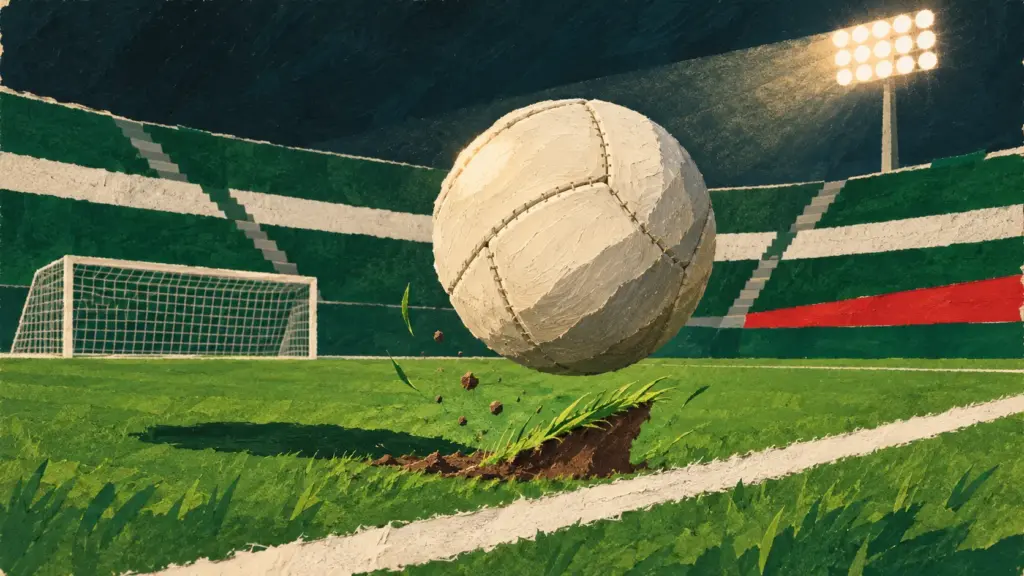
It clipped a divot. A ball that had been travelling low jumped over the Sporting goalkeeper. Fernandes had turned a half-time deficit into a lead within five minutes of the restart. For anyone trying to judge what United created in that spell, it matters how the ball got past Kaique. United earned the penalty by getting Martínez into the box. Repeating the long shot on a smoother strip of turf would give the goalkeeper a very different job.
Why the cross was worth following
In the 80th minute, Iván Fresneda floated a cross towards Lammens. Suárez kept going with it. When the keeper failed to hold the ball under pressure, the striker was close enough to hook it into the exposed net. The finish takes a moment. What made the finish possible was where Suárez was while the ball was still in the air. Stopping even a stride earlier would have given Lammens time to recover.
United almost went back ahead from a Fernandes corner, only for the referee to rule out the goal after reviewing contact with Kaique. Opta counted seven United attempts and two on target. Both went in. Sporting had eleven attempts, including those two early penalties. The totals give some scale to Fernandes’s quick double. United did their scoring in two minutes and then had half an hour to protect the lead before Suárez caught up with them.
The draw gave each side a point and left both goal differences unchanged, a detail that can matter once the league phase gets tight. Our guide to how goal difference caught up with Dinamo Zagreb follows one season all the way to that cutoff. Sporting can put a name to the point they kept in Lisbon. Suárez took a second penalty after missing the first, then chased a cross that looked for all the world like the keeper’s ball.
Keep reading
How Idan Toklomati sent Charlotte past Chicago
November 29, 2026Idan Toklomati kept running after his pass to Pep Biel. Their one-two gave Charlotte a 2–1 win over Chicago and…
Orlando City 1–3 Cincinnati: Evander left the last goal for Gidi
November 20, 2026Evander scored twice and set up Samuel Gidi as Cincinnati came from behind to beat Orlando City 3–1 and reach…
Argentina vs Cabo Verde Match Review
July 16, 2026Read BetKulture’s Argentina vs Cabo Verde match recap, key turning points, and top picks review after Argentina survived a Cape…